









What to Wear in Lapland: Your Winter Clothing Guide
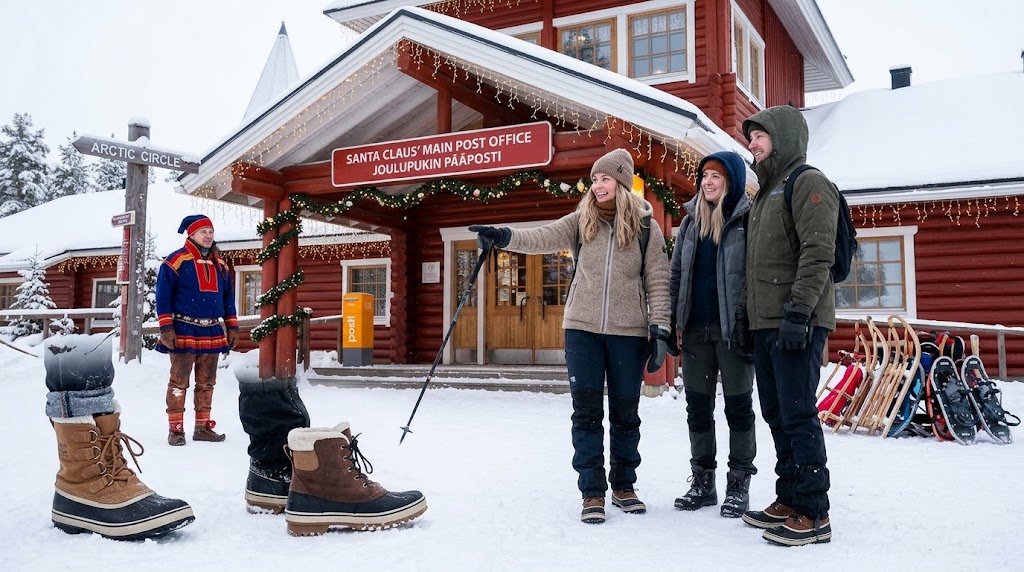
Quick answer: What to wear in Lapland in winter comes down to layers: a wool or synthetic base layer, a fleece or wool middle layer, and a windproof, water-resistant outer layer, plus a spare insulating layer for standing still. Add a hat that covers your ears, mittens, wool socks and insulated boots with good grip, and avoid cotton. Tours usually lend thermal overalls and boots, so check what yours include and pack warm clothes for everything else.
I pay for my own stays: no free rooms, no press trips.
Updated for winter 2026/27 · Last verified:
Quick Menu
What to Wear in Lapland: Quick Facts
| Typical cold in Rovaniemi | December around −6 to −10°C; January highs about −8°C, lows about −14°C; cold spells can reach −30°C or lower. See our Rovaniemi in winter guide for the month-by-month picture |
|---|---|
| Layers | Base, middle, outer, plus a spare insulating layer for standing still |
| Fabrics | Wool or synthetic, never cotton |
| Hands | Mittens, with thin liner gloves underneath |
| Feet | Insulated, waterproof boots with grip and wool socks |
| Head | A hat that covers your ears, and a scarf or balaclava |
| On tours | Thermal overalls, boots and mittens are usually lent, so check |
| Children | Many operators can’t supply clothing for under-4s |
The Layering System for Lapland
Lapland cold is dry, which makes it easier to handle than damp cold, as long as you layer properly. Wind is what makes it feel colder.
Don’t wear one huge jacket instead of layers. Several thinner layers let you adjust, and sweating then cooling is what makes you cold. I’d spend money on boots and base layers before a new jacket.
What Tours Provide and What to Bring
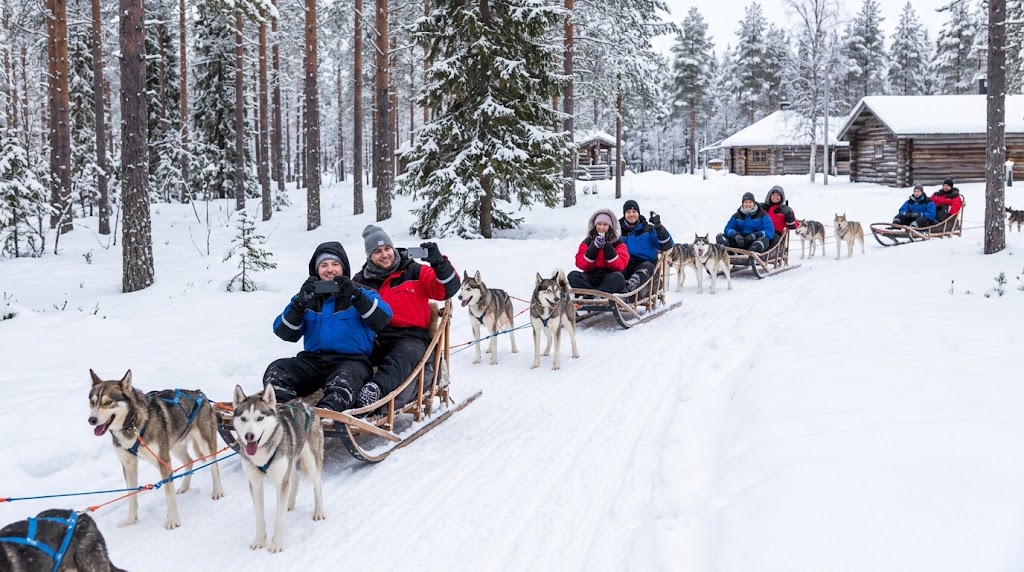
Husky, snowmobile and reindeer tours usually lend thermal overalls, boots and mittens, and many include protective headgear for snowmobiles. Some operators charge extra, so check before you book.
| Item | Usually lent on tours | Bring yourself |
|---|---|---|
| Thermal overalls | Yes | — |
| Winter boots | Yes | Insulated boots for the rest of the trip |
| Mittens or gloves | Yes | Thin liner gloves |
| Thick socks | Often | Wool socks, several pairs |
| Protective headgear (snowmobile) | Often | A hat, and a scarf or balaclava |
| Base layers | — | Yes, plus a spare set |
| Middle layer | — | Yes |
| Warm jacket for free time | — | Yes |
Many operators can’t supply winter clothing for children under four, so bring a full set for them.
Boots and Socks for Lapland
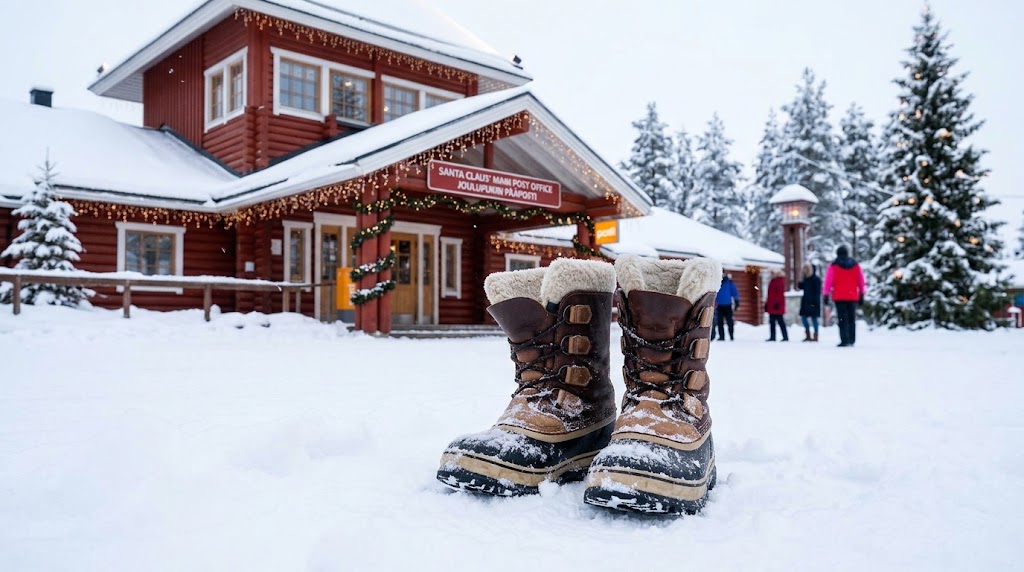
Choose insulated, waterproof boots with good traction. Buy them a little loose so there’s room for wool socks, because trapped air insulates, while tight boots cut off circulation. On icy pavements use footwear with grip or add ice cleats. A single good wool sock is better than squeezing two pairs into a tight boot.
Hands and Head: Mittens, Hats and Balaclavas
Mittens are warmer than gloves because your fingers share heat. Wear thin liner gloves under them so you can use your phone and camera for a few seconds without exposing bare skin. A hat that covers your ears, plus a scarf or balaclava for wind, makes a big difference. Disposable hand warmers help on long, still evenings.
What to Wear for Each Activity
What Changes by Month
For the full month-by-month weather picture, see our Rovaniemi in winter guide.
| Period | What to wear |
|---|---|
| Late October to November | Waterproof layers, since snow is settling and it can be wet, plus a warm hat and gloves |
| December to January | The full system, with a spare layer for evenings |
| February to March | The same layers, but milder days, so you’ll shed more |
Staying Safe in the Dark and the Cold
Days are short and darkness comes quickly, so wear reflective clothing or attach reflectors when walking near traffic. Don’t walk on river ice, which can be thin and unsafe, and take care crossing icy roads.
Batteries and Cameras in the Cold
Cold drains phone and camera batteries quickly. Keep spares in an inside pocket and bring an insulated bag or wrap for your camera. For how to photograph the aurora, see our northern lights guide.
Lapland Packing List
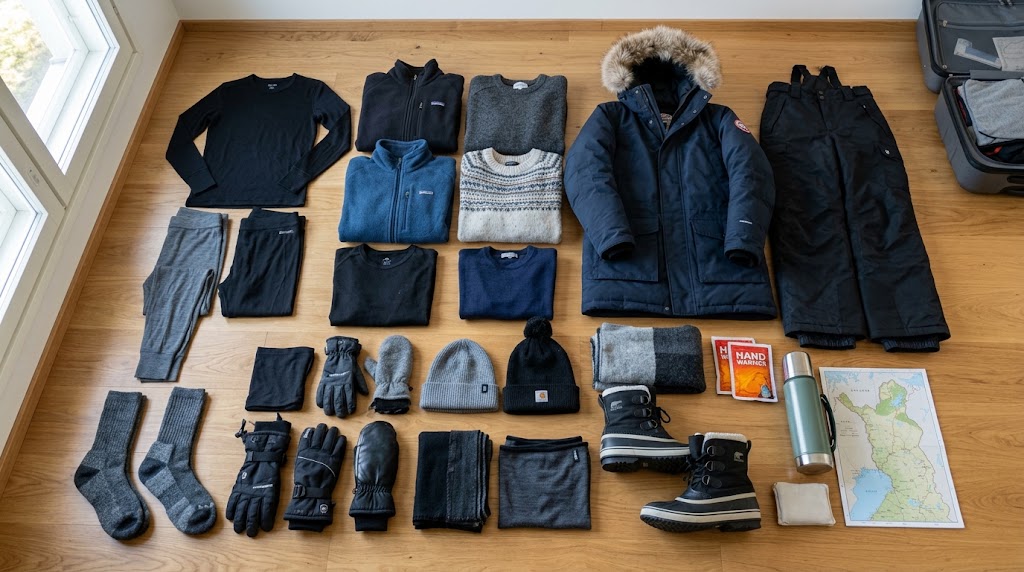
- Two sets of wool or synthetic base layers
- A fleece or wool middle layer
- A windproof, water-resistant jacket and trousers
- A spare insulating layer
- Insulated, waterproof boots with grip
- Wool socks, several pairs
- Mittens and thin liner gloves
- A hat that covers your ears
- A scarf or balaclava
- Hand warmers
- A reflector or reflective clothing
- Spare batteries and an insulated camera bag
Common Mistakes When Dressing for Lapland
- Wearing cotton. It holds moisture and stops insulating.
- Tight boots. There’s no room for warm air or thick socks.
- Gloves instead of mittens. Mittens keep your fingers warmer.
- One huge jacket instead of layers. You can’t adjust.
- Assuming tours provide everything. Check what’s included, and remember children under four.
- Underdressing for the aurora. Standing still is much colder than moving.
- Overdressing indoors. Sweating then going outside will chill you quickly.
What to Wear in Lapland FAQ
What should I wear in Lapland in winter?
Do I need special polar clothing?
Do tours provide winter clothing?
What boots should I wear?
What should I wear to see the northern lights?
What about children under four?
Jean-Paul Cavalletti is the founder of DineWithJP. He has reviewed 200+ hotels across 18 countries and pays for his own stays, with no free rooms and no press trips. Read more at dinewithjp.com.